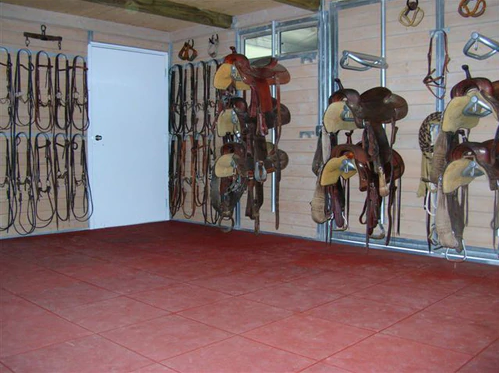
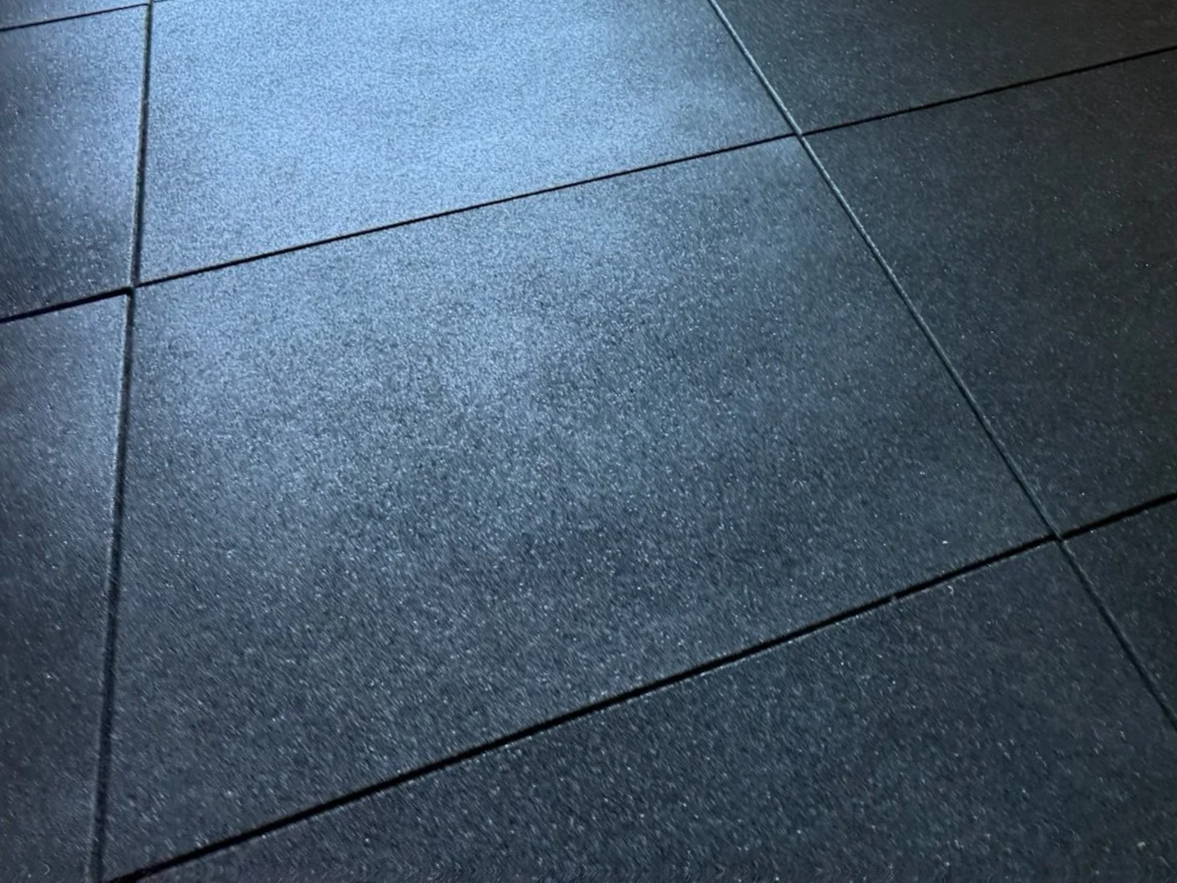
 Image 1 of 8
 Image 2 of 8
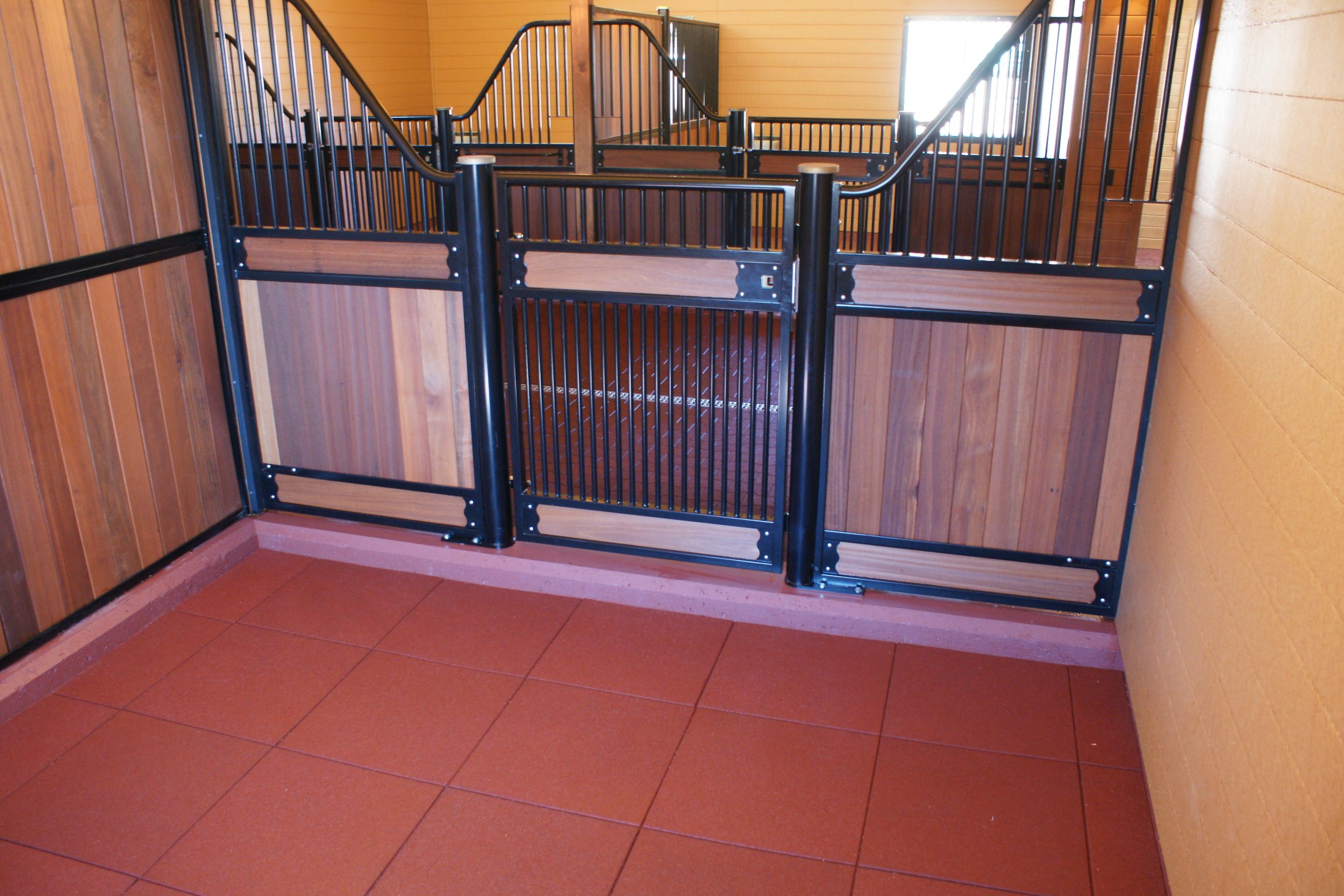 Image 3 of 8
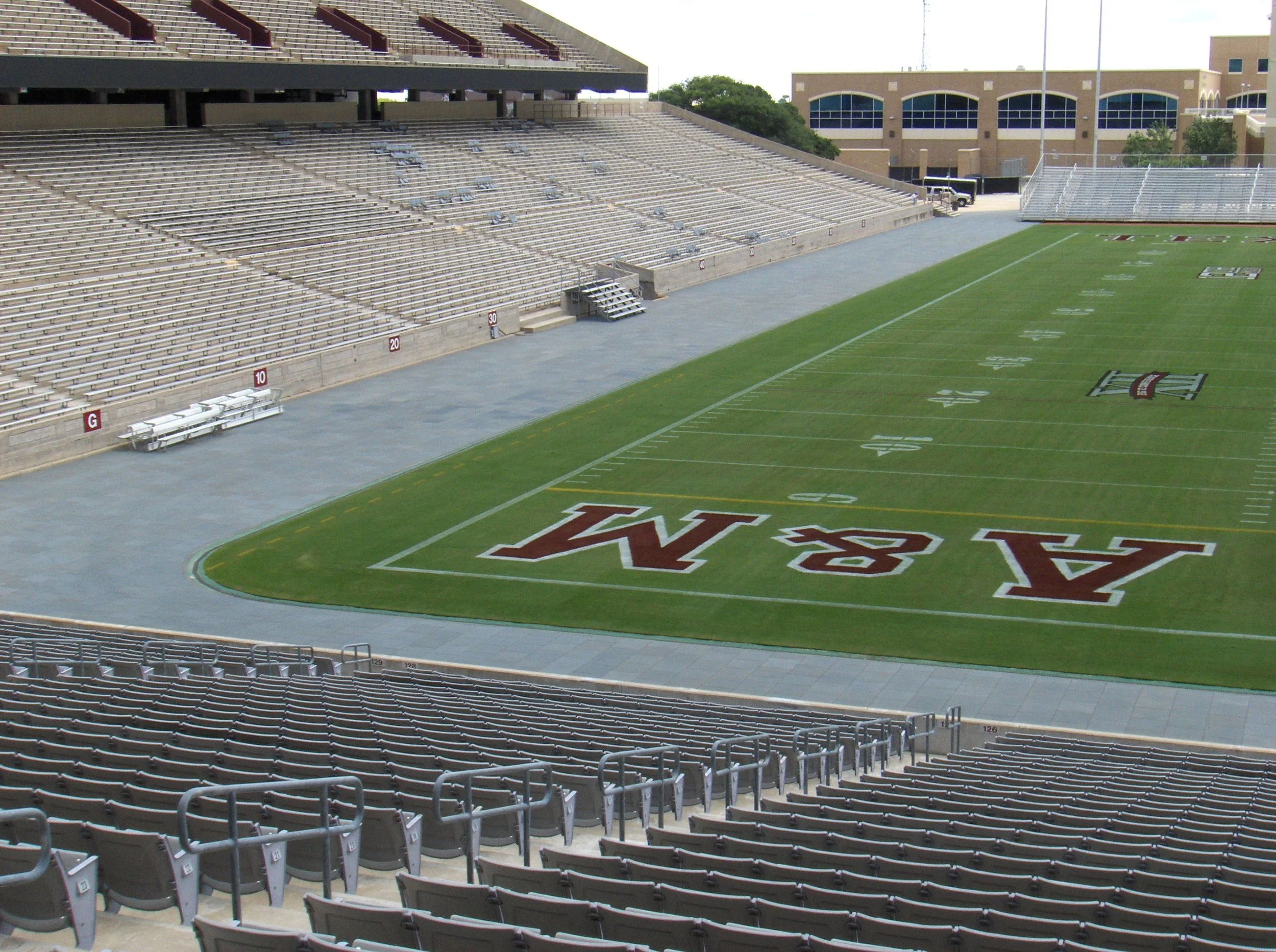 Image 4 of 8
 Image 5 of 8
 Image 6 of 8
 Image 7 of 8
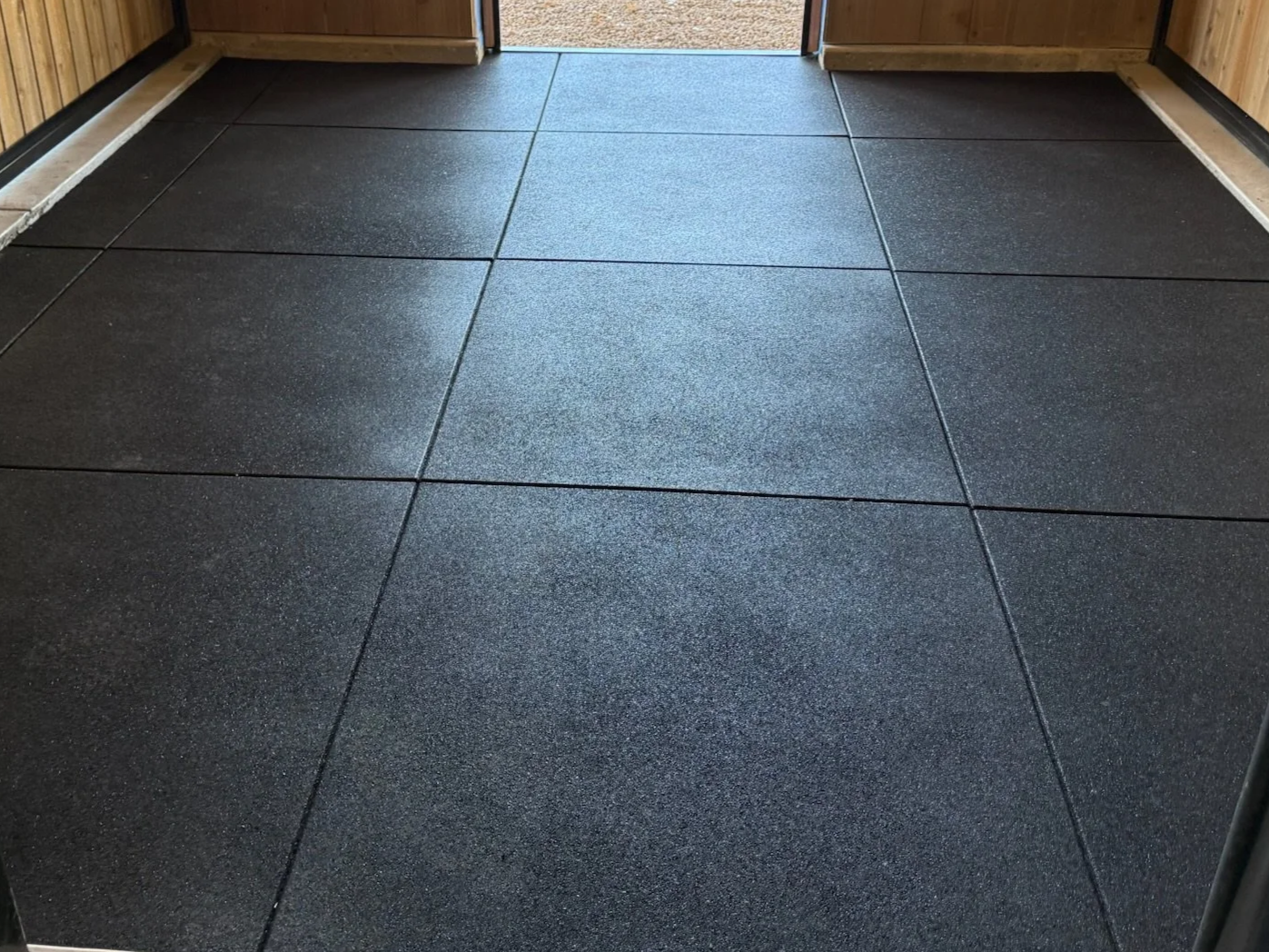 Image 8 of 8
Equine Rubber Tiles vs Equine Vulcanized Rubber Mats
What to know, when each makes sense, and the pros/cons. This kind of guide is helpful if you’re deciding which to use in horse stalls, aisles, or barns.
| Feature / Quality | Rubber Pavers and Tiles | Vulcanized Rubber Mats |
|---|---|---|
| Shock absorption & Horse comfort | Excellent — dense, elastic, and engineered to absorb hoof impact. Better for joints and long-term comfort. | Less cushioning — firm surface can be harder on joints, especially long-term. |
| Durability & Aging | High — designed to resist hardening, cracking, curling, or edge lift even under heavy use. | Durable but more prone to issues over time: mats may curl at corners, harden or crack, seams may gap, leading to instability or hygiene problems. |
| Slip Resistance & Traction (wet or dry) |
Reliable — engineered surface gives consistent traction even when wet, without relying on dimples that wear down. | Slimmer safety margin — many mats rely on grooves/dimples for grip, which can wear smooth over time and become slippery when wet or dirty. |
| Hygiene & Cleaning | Easier to maintain — interlocking seams or glued installations keep debris, urine, and bedding from getting trapped beneath, reducing odors and bacteria buildup. | Often heavier and grooved — seams and texture can trap urine, moisture, and bedding debris, complicating cleaning and sanitation. |
| Flexibility & Customization (fit, layout) |
Very flexible — tiles and rolls can be cut to size and adjusted for different horse stall/aisle configurations. |
Less flexible — mats are large, heavy, more awkward to cut/fit; can be cumbersome in irregularly shaped stalls or tight spaces. |
| Environmental & Materials Considerations | Often made with recycled rubber and polyurethane binders — generally considered more eco‑conscious and less likely to off‑gas harsh chemicals. | Traditional vulcanized mats may involve harsher chemicals (sulfur‑based vulcanization), with associated odor and potential off‑gassing. |
| Installation & Maintenance Effort | Installation can be done with glue or interlocking/seam‑based systems; once installed (or laid), maintenance is typically easier long‑term. | Often just laid loose (heavy mats), which may shift, curl, or gap; maintenance (cleaning below mats, repositioning) becomes more frequent. |
What This Means for Horse Facilities
If you prioritize comfort, hygiene, slip resistance, and long-term durability — especially for high‑end stables, stalls, aisles near track/barn, wash bays — rubber tiles or engineered rubber flooring are generally a superior choice.
If you need a budget-friendly, quick-to-lay solution and are willing to compromise a bit on cushioning and maintenance, vulcanized rubber mats may suffice — but be aware of their long-term drawbacks (hardening, hygiene issues, potential odor, slip risk over time).
For heavy-use areas with frequent cleaning, moisture, or bedding changes, engineered tiles/rolls help with maintenance and sanitation, while vulcanized mats tend to trap moisture and waste.
For irregular stall shapes or custom barn layouts, tiles offer more flexibility than heavy mats which are harder to cut and fit neatly.
Conclusion — Which Should You Choose?
If you run a professional-level horse facility, race track barn, or want top-tier durability, horse comfort, cleanliness, and long-term value, go with rubber tiles / high-quality engineered equine rubber flooring.
If budget is tight or you need a simple, heavy-duty mat for occasional stalls or short-term use — and you’re willing to maintain them regularly — vulcanized rubber mats can work.
Given what we know about each, we believe engineered rubber tile/roll systems offer the best balance of safety, health, performance, and longevity for horses and handlers alike.